

Choosing the right size
The right snap frame size depends on three things: the paper you want to show, the wall space you have and how far away people will stand. This guide gives you a simple way to choose a frame that looks neat and is easy to read.
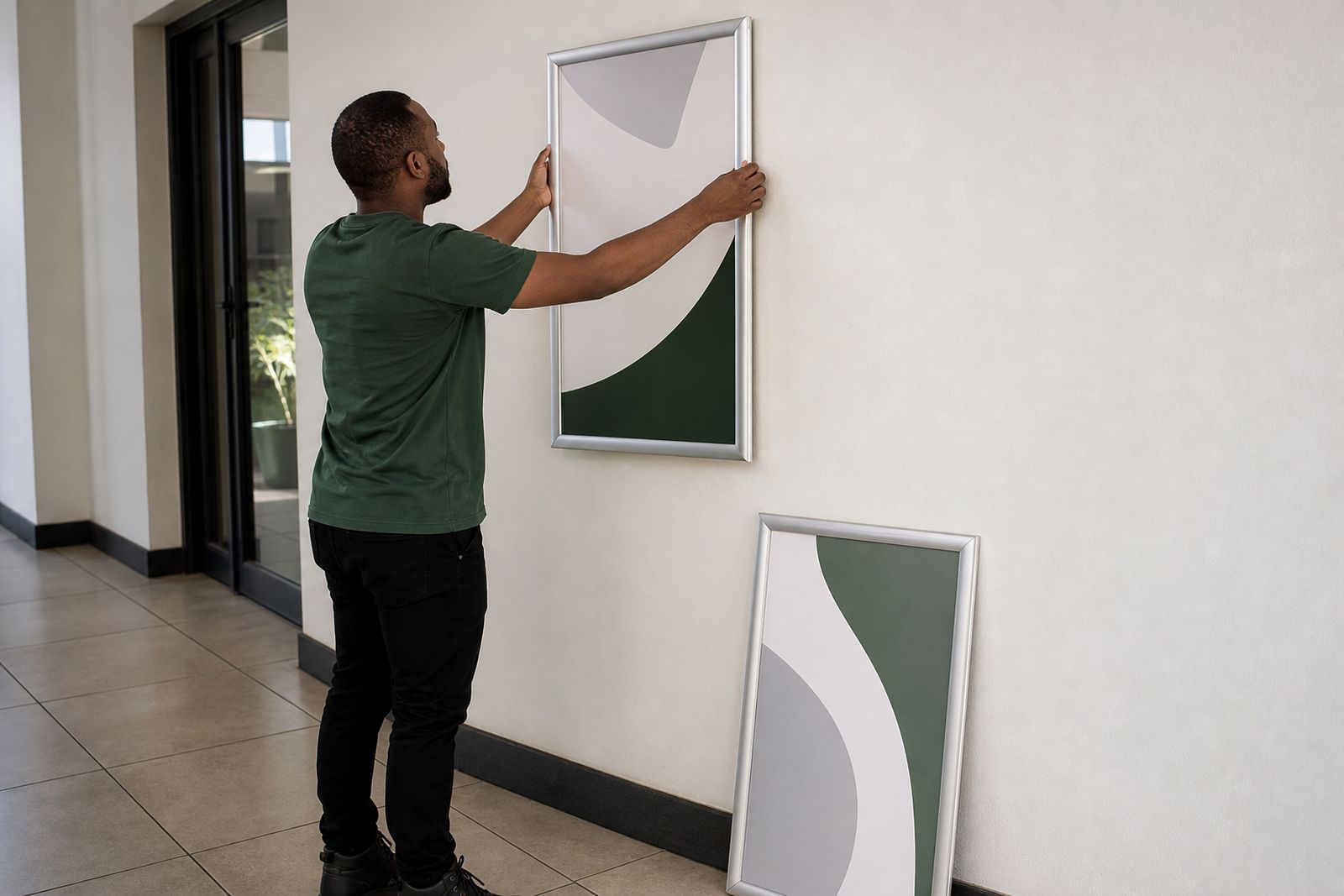
Start with the poster or notice you already have
The quickest way to choose a snap frame is to start with the sheet you need to display. If you already print notices on A4 paper there is usually no reason to jump straight to A2. A frame should suit the paper first, then the space around it. This keeps costs sensible and avoids a notice looking lost on a big wall.
For home and office use, the most common choices are A4 and A3 for notices, A2 for larger promotions or school communication, and A1 to A0 where you need stronger visibility from across a passage or waiting area. If your artwork is not on an A-series size, custom sizes can make more sense than trimming the print or leaving odd gaps around the edge.
- A4: good for room rules, menus, schedules and single notices.
- A3: useful where A4 feels too small but wall space is limited.
- A2: a good middle size for reception points, clinics and school foyers.
- A1: suited to promotions, event posters and busier public areas.
- A0: best where the message must be seen from much further away.
Check viewing distance before you go bigger or smaller
People should be able to read the main message without walking right up to the frame. In a narrow office passage, an A4 or A3 frame may be enough because viewers pass close by. In a school hall, retail entrance or clinic waiting area, the same sheet can be too small once chairs, counters or foot traffic push people further back.
As a simple rule, choose the smallest frame that still lets the headline and key details read comfortably from the normal viewing point. If most people will stand one to two metres away, A4 and A3 often work well. At two to four metres, A2 or A1 tends to read better. For larger open spaces, A0 can be the safer choice especially where there is glare from windows.
- Stand where viewers will usually stand, not where you plan to mount the frame.
- Check the distance in metres and ask what must be read first.
- If the message includes timetables, price lists or many lines of text, go larger.
- If the display is mostly a bold heading or simple artwork, a smaller size may still work.
Measure the wall space properly
A frame can fit on a wall and still look wrong. Leave enough clear space around it so the display does not feel cramped by light switches, skirtings, counters or door frames. This matters in smaller homes, reception areas and school passages where walls often carry more than one notice point.
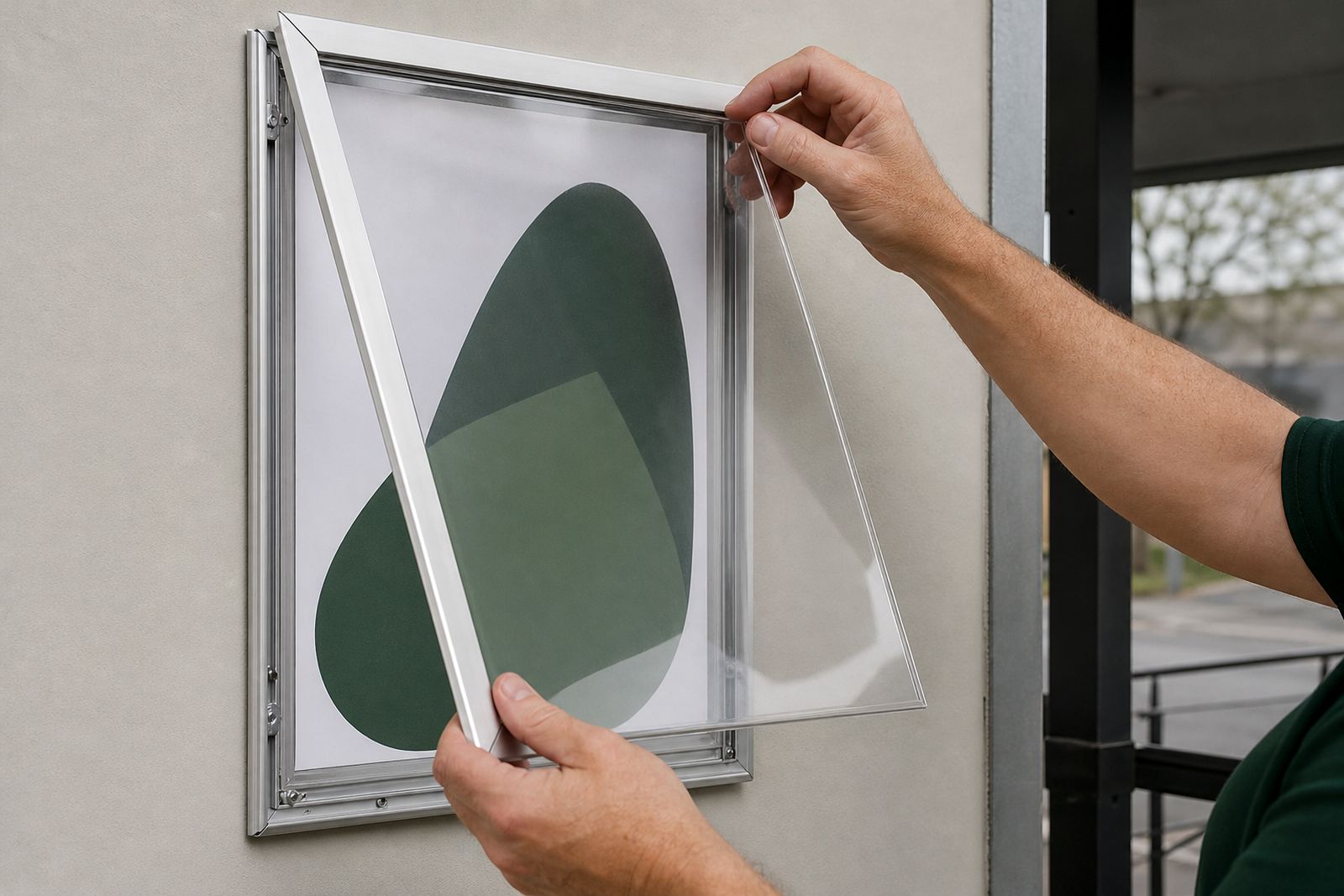
Measure the height and width of the free area, then allow space around the frame for comfortable viewing and for the front-opening edges to operate. If the frame sits near a corner, remember that clip edges must still open fully when you change the poster. This small detail gets missed often and then the frame ends up mounted too tight to use properly.
For neat planning, place masking tape on the wall to match the outside size of the frame before you order. It helps you judge proportion quickly, and it shows whether the frame will sit too high above a chair rail or too close to a plug point.
Match the size to the room and purpose
Different spaces call for different sizes. In homes, a snap frame in a kids room, study or kitchen usually looks best when it stays modest and practical. A4 and A3 are common choices for artwork, reminders and rotating posters. In offices, the right size depends on whether the frame is for internal notices, reception branding, directions or compliance messaging.
Schools and clinics often need clearer visibility because people move through shared spaces quickly. In these settings, A2 and A1 are common because they can carry larger text and bolder layouts. Shops may use A3 for counter notices and A1 or A0 in windows or entrance areas. If the frame will be double-sided in a hanging position, think about how it reads from both directions not just one.
- Home walls: A4 to A3 usually keeps the display tidy.
- Office notices: A4, A3 or A2 depending on how much text you need.
- Reception and waiting areas: A2 to A1 is often easier to notice from a distance.
- School foyers and shared passages: A2, A1 or A0 for stronger visibility.
- Retail windows and promotions: choose the biggest size the window area can carry cleanly.
Think about mounting, glare and outdoor use
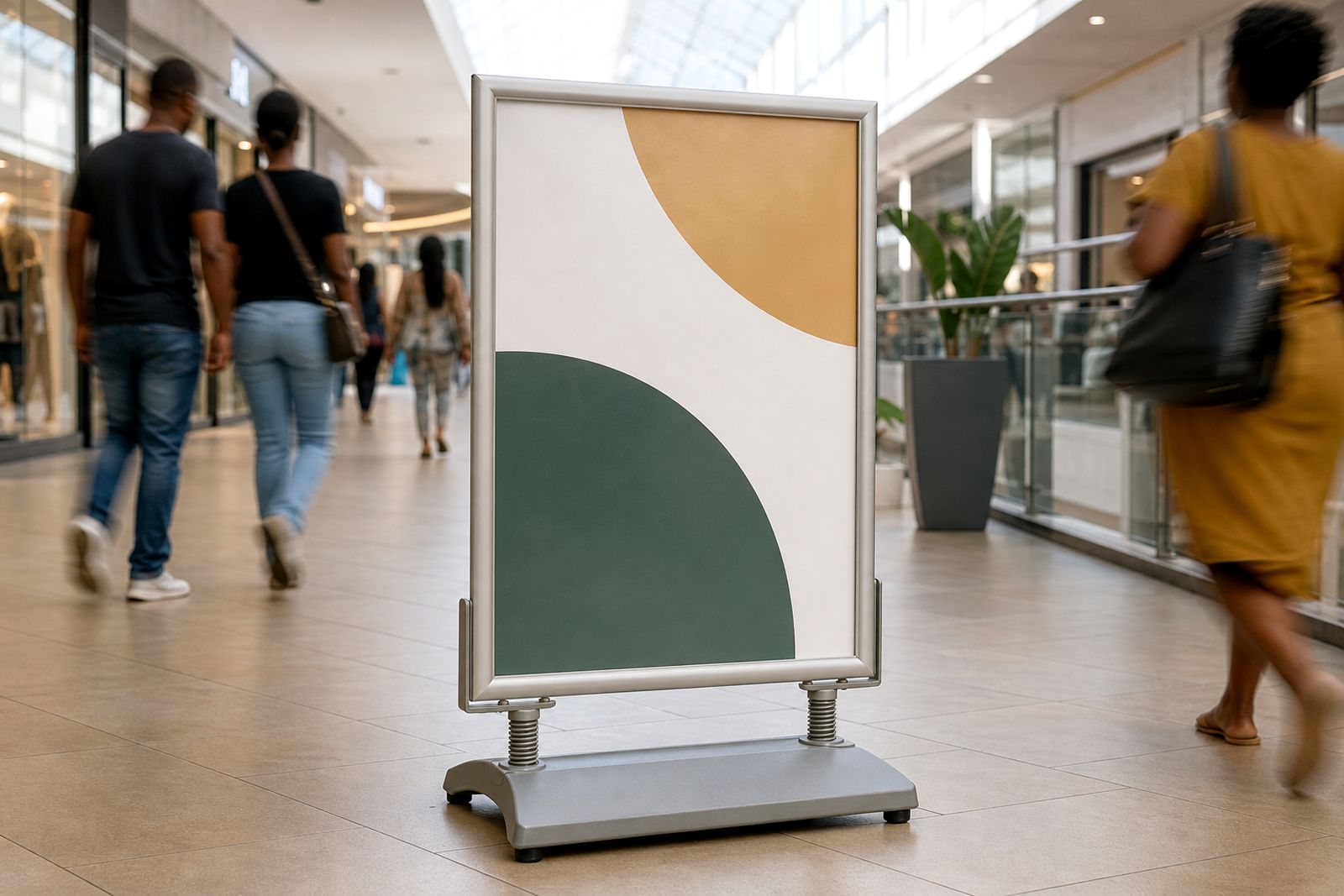
Size choice is not only about the poster. The mounting style can make one size feel more suitable than another. A wall-mounted frame can often go larger because the wall gives support, while a freestanding poster stand may need a size that stays balanced and practical in the available floor area. Hanging frames should also suit the ceiling height so they do not sit too low in walkways.
Light matters too. In bright rooms near windows, anti-glare covers help viewers read the message without moving around to avoid reflections. Along the coast, including Durban and nearby areas, humidity and wind exposure can also affect where outdoor-rated frames work best. A covered entrance can handle a different frame size and position from a fully exposed outside wall, so it helps to plan both the frame and the location together.
If you are choosing for municipal buildings, schools or clinics, also leave room for safe passage and avoid mounting where the frame could obstruct doors, handrails or required notice boards. Bigger is not always better if it creates clutter or blocks movement.
A simple checklist before you send an enquiry
Most size mistakes happen because one measurement or one viewing detail gets skipped. Before sending your enquiry through our contact page, gather the basic information below. It makes the recommendation quicker and helps narrow down the best standard or custom size.
- The poster or paper size you want to display.
- The width and height of the available wall or floor space.
- The usual viewing distance in metres.
- Whether the frame will be wall-mounted, hanging or freestanding.
- Whether it is for indoor use or an outdoor-rated position.
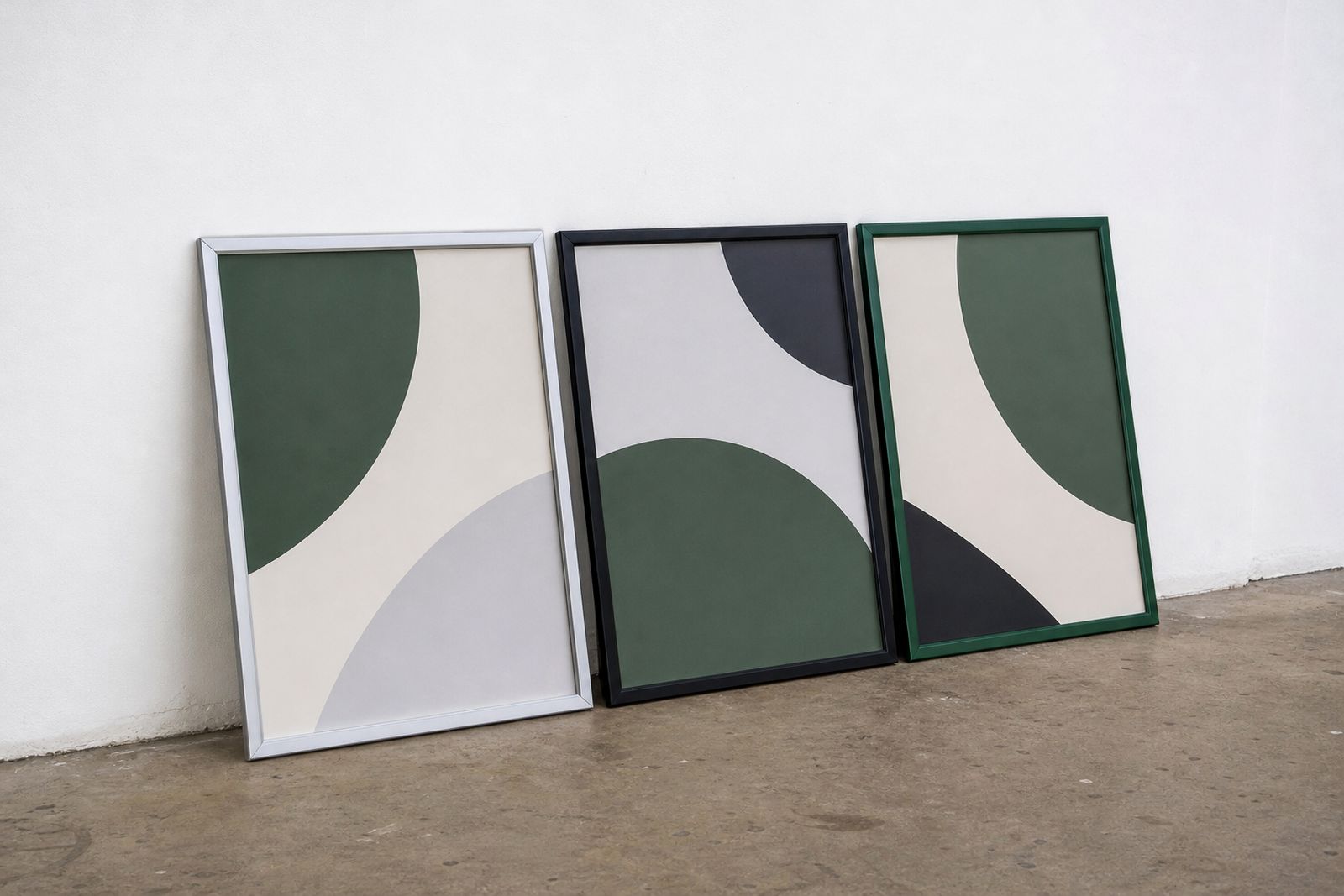
- Your preferred finish such as silver, black or a colour aluminium profile.
- Whether you need anti-glare covers, fixing kits or spare covers.
If you are unsure between two sizes, mention both. In many cases we can guide you to the better fit based on the space, how often the poster will change and whether the display needs to be read close up or from further away. A careful size choice at the start saves reprinting, redrilling and the usual frustration later.
What our Snap Poster Frames customers say
Verified Google reviews
Questions we get asked
Is A4 too small for an office notice board area?
Not always. A4 works well when people stand close to read the notice, such as in a staff passage or next to a door. If viewers will be further away or the notice has a lot of text, A3 or A2 is often easier to read.
Can I use a custom size instead of A-series sizes?
Yes. Custom sizes are useful when your poster does not match A-series paper, or when you need a frame to fit a specific wall panel, window section or existing display layout.
How do I choose between wall-mounted and freestanding frames?
Choose wall-mounted frames where you have clear wall space and a fixed viewing point. Freestanding poster stands suit entrances, walkways and temporary displays where you need flexibility, but the floor area must be measured properly first.
Also worth a look

Tell us about the job
Send sizes, materials and where you are through our contact form, and we will come back with the practical options.
Open the contact form